Sen. Kevin Cramer Calls Bill Pulte a 'Funny Pick' for Acting DNI Role — What It Signals for Intelligence Leadership
Republican Senator Kevin Cramer of North Dakota publicly described Bill Pulte as a 'funny pick' for acting director of national intelligence, signaling bipartisan unease about the unconventional nature of the appointment. Pulte, better known for his social media philanthropy and his prior role leading the Federal Housing Finance Agency, represents a sharp departure from the career intelligence and military profiles traditionally associated with the nation's top spy post. The comment, delivered on CNBC, reflects growing scrutiny of whether outsider appointments to sensitive national security roles can command institutional trust.
Definition
The Director of National Intelligence (DNI) is the statutory head of the U.S. Intelligence Community, responsible for coordinating analysis and intelligence sharing across 18 federal agencies, including the CIA, NSA, and DIA, and serving as the principal intelligence advisor to the President.
Key Takeaways
- → Senator Kevin Cramer's 'funny pick' remark is a rare public signal of Republican unease over an unconventional national security appointment, carrying more political weight precisely because Cramer is generally an administration ally.
- → Bill Pulte's background in social media philanthropy and housing finance regulation does not overlap with the tradecraft, counterintelligence, or geopolitical analysis functions central to the DNI role, creating an institutional credibility gap.
- → Acting DNI appointments bypass Senate confirmation, meaning oversight pressure will flow through the Senate Intelligence Committee rather than a formal confirmation hearing — reducing accountability but increasing informal political friction.
Verified source · CNBC Television
Open on YouTube →The Cramer Signal: More Than a Quip
When a sitting Republican senator uses the word "funny" to describe a White House pick — on national financial television, no less — it is rarely a compliment. Senator Kevin Cramer's characterization of Bill Pulte as a "funny pick" for acting director of national intelligence is best read as a polite but pointed expression of institutional concern. In the context of Senate confirmation dynamics, "funny" translates roughly to: *unusual enough to warrant explanation*.
Who Is Bill Pulte?
Bill Pulte, grandson of homebuilding magnate William Pulte, gained national visibility through high-profile social media giveaways on X (formerly Twitter), earning the informal title of "Twitter philanthropist." His policy footprint expanded significantly when the Trump administration tapped him to lead the Federal Housing Finance Agency (FHFA), the regulator overseeing Fannie Mae and Freddie Mac. The FHFA role, while consequential, sits squarely within the economic and housing policy domain — a world away from the tradecraft, geopolitical analysis, and counterintelligence functions that define the DNI's portfolio.
The Structural Problem: Competency Signaling in Intelligence Roles
National intelligence leadership carries unique credibility demands. Career analysts, military officers, and seasoned diplomats who have historically held the DNI post bring institutional legitimacy that helps maintain trust among allied foreign intelligence services — particularly the Five Eyes partners. An acting appointment with a thin intelligence background creates an immediate signaling problem: foreign partners calibrate information-sharing depth partly on their assessment of U.S. leadership continuity and expertise.
Market and Policy Implications
At the intersection of defense contracting, cybersecurity, and geopolitical risk, intelligence leadership transitions matter to capital markets. Defense and intelligence sector contractors — Booz Allen Hamilton, SAIC, Leidos — are sensitive to policy continuity signals. Investor attention will focus on whether Pulte, if confirmed in any capacity, maintains or disrupts existing intelligence procurement priorities and interagency coordination frameworks established under prior leadership.
Senate Dynamics: The Cramer Weathervane
Senator Cramer is generally a reliable administration ally, which makes his "funny" framing consequential rather than dismissible. It suggests that even within the Republican conference, there exists a threshold of institutional discomfort that unconventional picks can trigger. This does not necessarily block confirmation — acting appointments frequently bypass Senate confirmation entirely — but it shapes the political narrative and may influence oversight posture on the Senate Intelligence Committee.
Watch the Source

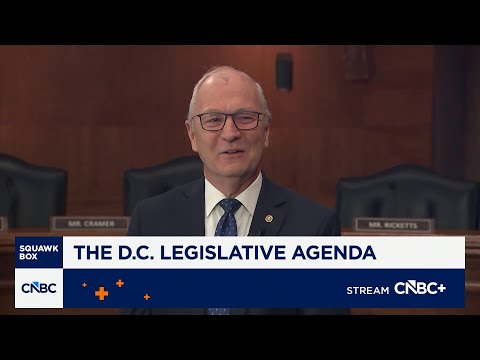
Source: CNBC Television — Watch on YouTube
Market Impact
Defense and intelligence sector equities, particularly pure-play government IT and intelligence contractors, may experience short-term volatility as investors assess leadership continuity risk; broader market impact is limited unless the appointment signals deeper disruption to national security procurement timelines or interagency coordination affecting critical infrastructure sectors.
CHANT INTELLIGENCE Commentary
CHANT INTELLIGENCE VIEW: The Pulte-for-DNI episode is a case study in what happens when appointment logic optimized for loyalty and media narrative collides with roles that require deep institutional credibility. Senator Cramer's 'funny' framing is diplomatic cover for a substantive concern that will not disappear with the news cycle. For decision-makers in AI, defense tech, and cybersecurity — sectors deeply intertwined with intelligence community contracting — the operational question is not whether Pulte is personally capable of learning the role, but whether the signaling damage to Five Eyes relationships and Senate oversight posture creates procurement and policy uncertainty in the near term. The answer, based on historical precedent, is: modestly, yes.
Sources
FAQ
Does an 'acting' DNI appointment require Senate confirmation?
No. Acting appointments are typically made under the Federal Vacancies Reform Act or agency-specific succession statutes, allowing the executive branch to install temporary leadership without a Senate vote. This mechanism grants speed and flexibility but limits formal congressional oversight at the appointment stage.
Why does the DNI's professional background matter to U.S. allies?
Intelligence-sharing relationships — especially with Five Eyes partners (UK, Canada, Australia, New Zealand) — are built on mutual confidence in institutional competence and discretion. A DNI perceived as lacking intelligence community credibility can cause allied partners to compartmentalize or limit sensitive information flows, creating real-world gaps in threat awareness.
Build with Chant Technologies
From AI agents to Web3 platforms — engineering teams that ship production systems.
Related Intelligence
We could see some of the stock market gains in our lifetime after 2026, says Fundstrat'… — CHANT INTELLIGENCE Brief
Original Business News intelligence on "We could see some of the stock market gains in our lifetime after 2026, says Fundstrat'…": context, market impact, and what decision-makers should watch next.
Blue Origin's New Shepard Anomaly: A Setback in Commercial Space Ambitions
A recent in-flight anomaly involving Blue Origin's New Shepard rocket has prompted a halt in operations, significantly impacting the company's suborbital space tourism and research payload delivery initiatives. This incident underscores the inherent risks in space exploration and necessitates a thorough investigation before commercial flights can resume, influencing timelines and competitive positioning within the private space sector.
This is NVIDIA Alpamayo Thinking Out Loud — CHANT INTELLIGENCE Brief
Original AI Infrastructure intelligence on "This is NVIDIA Alpamayo Thinking Out Loud": context, market impact, and what decision-makers should watch next.